
TLDR
-
The Core Premise: The article explores the intersection of sound healing (specifically Biofield Tuning) and neuroscience, aiming to separate exaggerated online claims (like “frequencies that repair DNA”) from grounded science.
-
What Science Proves: There is robust evidence that sound and vibration physiologically affect the nervous system. Studies show that practices like humming increase nitric oxide, and Tibetan singing bowls can measurably lower anxiety, shift brainwaves (EEG), and improve heart rate variability (HRV).
-
The Role of Entrainment: Entrainment is a proven law of physics where rhythmic systems synchronize. Human bodies are naturally rhythmic (heartbeats, brainwaves), meaning the nervous system can physically self-regulate by matching steady, external acoustic vibrations.
-
The Reality of Biofield Tuning: A 2023 pilot study showed promising reductions in anxiety and stress, the research specifically on Biofield Tuning is still in its infancy.
-
The Takeaway: Sound healing acts as a “bottom-up” somatic tool that helps release physical tension and hypervigilance directly through the body, offering a calming experience for the nervous system even where laboratory science is still catching up to clinical results.
A lot of people arrive at sound healing after they have already tried countless other approaches to feeling better. Therapy, mindset work, meditation, supplements, journaling, breathwork, nervous system tools – many have done years of inner work and still find themselves reacting in ways that feel disproportionate to their current life. Their body still braces during conflict. Their thoughts still spiral at night. Their nervous system still behaves as though something threatening is about to happen, even when logically they know they are safe.
So when someone experiences a Biofield Tuning session and notices that their shoulders have softened for the first time in months, their sleep has improved or that their mind suddenly feels unusually quiet, the experience can feel significant. Often the question that follows is: what is actually happening here? And more importantly: what does the research really say?
I think this conversation matters because the wellness space has become saturated with exaggerated claims. There are people confidently declaring that specific frequencies “repair DNA,” instantly heal trauma, or scientifically “balance the biofield” as though these are established facts. They are not. And in my opinion, overstating the evidence ultimately weakens trust in work that many people genuinely find supportive and meaningful.
The reality is more nuanced – and actually far more interesting.
There is legitimate, peer-reviewed evidence showing that sound and vibration affect the nervous system. There is early and promising research emerging around Biofield Tuning specifically. There are also important limitations, unanswered questions, and areas where lived experience currently extends beyond what science has definitively proven.
I believe we can hold all of that honestly at the same time.
Does Sound Actually Affect the Nervous System?
The strongest and most defensible part of this conversation is simple: sound and vibration do affect the nervous system. You already know this intuitively – how many times has a song changed your internal landscape?
Human beings are rhythmic organisms. The heart beats rhythmically, the breath moves rhythmically, and the brain itself functions through electrical oscillations and patterned activity. The nervous system is constantly responding to rhythm, pacing, tone, and environmental cues. Sound is therefore not just something we hear psychologically – it also affects us physiologically.
One of the most useful additions to the research landscape is the growing evidence around humming and nitric oxide. Studies led by Weitzberg and colleagues found that humming significantly increases nasal nitric oxide production – robustly enough that the effect is now used in sinus-related research settings.

This is important because it offers one of the clearest and most measurable examples of vibration directly influencing physiology in real time. Unlike some of the more speculative claims surrounding frequencies, this sits on relatively solid ground scientifically.
Another meaningful development is a stronger randomised controlled trial examining Tibetan singing bowls. Earlier research had already suggested reductions in tension, anxiety, and emotional distress following sound meditation, but many of those studies lacked control groups. A 2023 study by Rio-Alamos and colleagues improved on this by comparing singing bowl sessions against both progressive muscle relaxation and a waiting-list control group. Participants receiving the sound intervention showed greater reductions in anxiety alongside measurable shifts in heart rate variability and EEG patterns associated with relaxation.
This strengthens the broader argument that sound-based practices can influence physiological state in measurable ways.
At a more experimental level, emerging work from Kyoto University is beginning to explore how audible sound may act as a mechanical stimulus at the cellular level. Research led by Masahiro Kumeta found that cultured mammalian cells altered the expression of mechanosensitive genes in response to acoustic stimulation.
This area of research, known as mechanotransduction, is still early and should not be overstated. It is absolutely not proof that tuning forks “heal cells” or repair tissue in a clinical sense. But it does support a more grounded and scientifically credible version of a statement often oversimplified online: that sound is not only psychologically perceived through hearing, but can also function as a form of mechanical input that living tissue responds to.
Research on sound and vibration broadly has shown measurable effects on stress levels, mood, heart rate variability (HRV), vagal tone, and emotional regulation. Studies involving singing bowls, meditative sound practices, and low-frequency vibration have demonstrated reductions in anxiety, tension, fatigue, and emotional distress.
One particularly interesting 2025 study examining low-frequency vibration found measurable increases in parasympathetic nervous system activity – the branch associated with “rest and digest” states, recovery, and regulation. While this research was not conducted specifically on Biofield Tuning, it adds to a growing body of evidence suggesting that vibration can influence autonomic nervous system function in measurable ways.
Importantly, this is not the same thing as proving that tuning forks “heal trauma” or definitively alter an energy field. Those are much larger claims that current research does not conclusively support. But it does support the idea that sound and vibration can shift physiological state, influence stress responses, and help the nervous system move toward regulation.
When you think about everyday human experience, this is not actually surprising. We instinctively rock babies to calm them. Music can change our emotional state within seconds. The tone of someone’s voice can either soothe us or make us feel threatened before we consciously process why. Rhythm and sound have always influenced the body.
Modern research is simply beginning to measure some of what humans have intuitively known for a very long time.
What Is Entrainment – and Why Do People Keep Talking About It?
One of the most important concepts in sound-based therapies is something called entrainment.
Despite the mystical way it is sometimes spoken about online, entrainment is not pseudoscience. It is a real and well-documented principle in physics. The term refers to the tendency of rhythmic systems to synchronise with one another over time.
The classic example comes from the Dutch scientist Christiaan Huygens in the 1600s. He noticed that two pendulum clocks mounted on the same wall would eventually begin swinging in synchrony, even if they started at different rhythms. This phenomenon of coupled oscillators gradually matching one another has since been observed across countless systems in nature.
Human physiology behaves rhythmically too. Brainwaves, heart rhythms, breathing patterns, circadian rhythms, and nervous system states all operate through oscillation and pacing. This is why external rhythm can influence internal state.
You can see entrainment happening in ordinary life all the time. People naturally begin walking in step together. A calm person can regulate an anxious child simply through steady presence and tone of voice. Music can energise a room full of people or soften them emotionally within minutes. Even the instinct to rock a distressed baby is essentially rhythmic nervous system regulation.
In therapeutic sound work, the idea is that the body may begin responding to stable, coherent frequencies in a similar way. Rather than “forcing” the nervous system to calm down cognitively, the body gradually begins matching a steadier rhythm.
This is one of the reasons many people describe sound-based sessions as feeling strangely physical. Clients will often report spontaneous sighing, deeper breathing, muscle softening, emotional release, or the sensation that their whole system is “slowing down” before they have consciously analysed anything mentally.
Now, this is also where the conversation can become exaggerated very quickly online.
The existence of entrainment as a physical phenomenon does not automatically prove that every specific frequency has a magical healing property. There is currently no robust evidence proving claims such as “528Hz repairs DNA” or that certain frequencies guarantee particular emotional outcomes. Many of these ideas are modern inventions dressed up as ancient wisdom.
But the broader principle – that rhythm and vibration influence human physiology – is both scientifically plausible and experientially observable.
In many ways, sound work may be less about imposing a “healing frequency” onto the body and more about offering the nervous system a steady rhythm it can finally stop fighting against.
So What Does the Research Say About Biofield Tuning Specifically?
This is where the conversation becomes more nuanced.
While there is a growing body of evidence supporting sound and vibration broadly, the research specifically examining Biofield Tuning is still in its early stages.
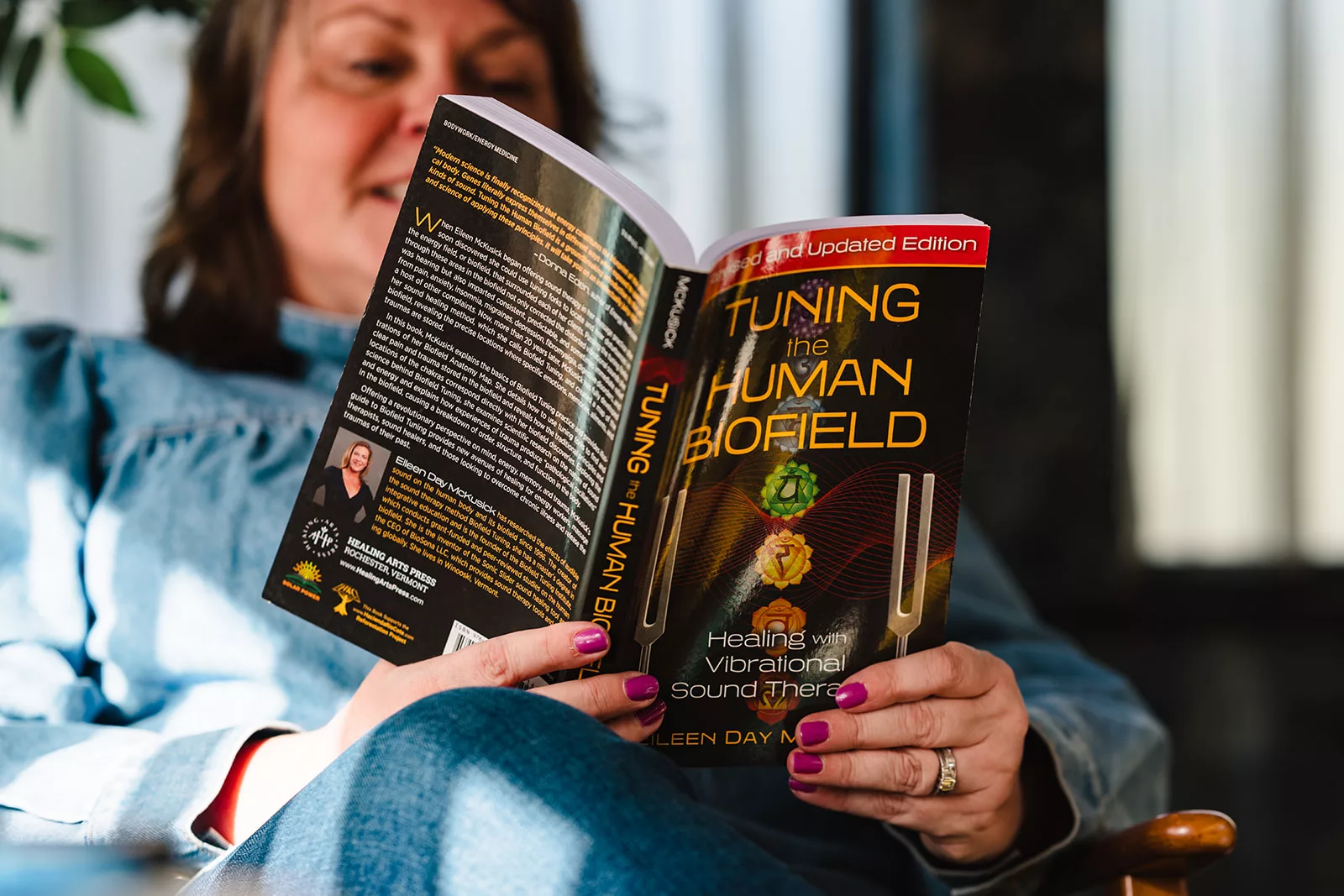
The most frequently cited Biofield Tuning study is a 2023 pilot study published in Complementary Therapies in Medicine by researchers including Shamini Jain and Eileen McKusick. In the study, participants experiencing moderate to high anxiety received three Biofield Tuning sessions over Zoom.
The results were encouraging. Participants reported significant reductions in state anxiety, trait anxiety, perceived stress, and negative emotional states following the sessions. For people interested in nervous system regulation, these findings are genuinely interesting.
However, it is equally important to understand the limitations of the study.
The trial involved only fifteen participants, had no control group, and was not randomised. Several of the researchers were directly connected to the modality itself, including the founder of Biofield Tuning, which introduces potential conflicts of interest. The authors themselves openly acknowledged that placebo effects, expectation, practitioner interaction, and natural fluctuations in anxiety could not be ruled out.
In other words: the results are promising, but they are not definitive proof.
This is an important distinction because I think people deserve honesty around what is established science versus what is still exploratory.
For me personally, this does not invalidate the experiences clients have during sessions. But it does mean I believe Biofield Tuning should be framed carefully and responsibly – not as a scientifically proven diagnostic system, but as an experiential therapeutic practice that many people report finding deeply regulating and supportive.
And honestly, I think this level of transparency strengthens the work rather than weakens it.
Because the truth is, many clients still report meaningful shifts:
- improved sleep
- reduced emotional reactivity
- reduced pain
- a quieter internal state
- less physical tension
- feeling calmer without having to “work at it”
These experiences are real, even if science is still catching up to fully explaining why they happen.
At this stage, the most accurate position is probably this:
The evidence for Biofield Tuning is early, promising, and incomplete. The broader evidence for sound and nervous system regulation is much stronger. And somewhere between those two things lies a field of inquiry that is still unfolding.
Why People May Experience Very Real Shifts
One of the things I find most interesting about this work is that people often experience noticeable physiological changes before they have fully formed thoughts about what is happening.
A client’s breathing slows down. Their shoulders soften. Their jaw unclenches. They feel deeply relaxed and grounded in a way that they were not twenty minutes earlier.
These are not abstract spiritual experiences. They are nervous system shifts.
And while we may not yet have definitive proof explaining every mechanism involved in Biofield Tuning specifically, there are several plausible ways to understand why sound-based work may still feel profoundly regulating for many people.
The first is simply that the nervous system responds to sensory input constantly. Rhythm, tone, vibration, pace, touch, safety, attention, and environmental cues all shape physiological state. Human beings are deeply relational and responsive organisms.
This is one reason regulation cannot always be achieved purely through cognition.
Many people intellectually understand their patterns extremely well. They know why they react the way they do. They understand attachment theory, trauma responses, nervous system states, and childhood conditioning. And yet their body still reacts automatically before their conscious mind has time to intervene.
That disconnect can feel incredibly frustrating.
But understanding something mentally is not always the same thing as helping the body experience enough safety to stop anticipating danger.
This is where many bottom-up approaches become valuable. Somatic work, breathwork, rhythm, touch, movement, and sound all work with the body directly rather than relying solely on conscious thought.
In that sense, Biofield Tuning may function less like an intellectual intervention and more like a nervous system experience.
Clients often describe the sessions in surprisingly practical language. They talk about feeling “lighter,” “quieter,” “less reactive,” or “more settled.” Some notice they sleep more deeply afterwards. It’s often reported that long term pain has reduced. Others realise they are no longer clenching their muscles unconsciously throughout the day.
Importantly, these shifts do not necessarily prove every theoretical explanation surrounding the modality.
But they do point toward something meaningful happening at the level of stress physiology, attention, regulation, sensory processing, or emotional state.
And honestly, I think modern healing conversations sometimes become too polarised. Either something is treated as mystical unquestionable truth, or it is dismissed entirely unless every mechanism has been conclusively proven in a laboratory.
Human experience is usually more complicated than that.
There are many things medicine now understands that humans were intuitively using long before the research caught up. There are also many ideas people once believed wholeheartedly that later turned out to be inaccurate.
Good practitioners, in my opinion, should be able to hold both curiosity and discernment at the same time.

Mind, Body… and the Field
One of the reasons I became interested in Biofield Tuning in the first place was because I had already spent years working through the “mind” and “body” layers of healing.
The psychological work helped enormously. Understanding my patterns, attachment dynamics, coping mechanisms, and nervous system responses gave me language for experiences that had previously felt confusing or shameful.
Then came the body-based work. Breathwork, somatic approaches, nervous system regulation, embodied processing. These approaches helped me realise that healing is not purely cognitive. Trauma is not just a story we tell ourselves; it also becomes physiological patterning. The body learns anticipation. It learns contraction. It learns hypervigilance.
But even after all of that, I still felt there were moments where something deeper remained unchanged.
This is where the concept of the “field” began making sense to me – not as something mystical floating outside the body, but as a way of describing the lingering energetic and physiological imprint experiences can leave behind.
I think this language can easily become overly abstract, so I want to explain what I personally mean by it.
When I talk about the field, I am talking about the overall vibrational and regulatory tone the nervous system has learned to live inside over time. The body is not just biochemical; it is also electrical, rhythmic, and electromagnetic. The heart itself generates a measurable electromagnetic field. Brain activity operates electrically. Nerves communicate through electrical impulses. Rhythm and frequency are already fundamental parts of human physiology.
From that perspective, the idea that unresolved stress patterns may continue influencing the nervous system beyond conscious thought does not feel especially far-fetched to me.
We see this clinically all the time.
A person may fully understand intellectually that they are safe, yet their body still reacts as though danger is imminent. Someone may know a relationship is healthy, but still brace for abandonment automatically. Another person may logically understand that a stressful event is over, while their nervous system continues behaving as though it is still happening.
The mind has updated.
The body, in some ways, has not.
For me, the concept of the field helps describe that lingering “signal” – the residual patterning still organising the system underneath conscious awareness.
This is not something I believe science has conclusively proven. I want to be very clear about that.
But as a working therapeutic model, it has helped me make sense of experiences that purely cognitive frameworks sometimes struggle to fully explain.
And importantly, I do not see this as fully replacing psychological or somatic work. Quite the opposite. I see the mind, body, and field as deeply interconnected layers of the same human experience.
The mind holds the story.
The body holds the reaction.
And perhaps the field holds the rhythm the whole system has adapted around.
Ancient Cultures Knew Sound Changed Human States

Long before modern neuroscience existed, cultures across the world were already using sound rhythmically, ceremonially, and therapeutically.
Ancient Indian traditions spoke about Nada Brahma – the idea that the universe itself is vibration. Chanting, mantra, and tonal practices were used not simply as religious rituals, but as ways of altering consciousness and creating inner coherence.
Pythagoras, the Greek philosopher and mathematician, explored the mathematical relationships between harmonious musical intervals and believed that harmony itself reflected an underlying order within both the human being and the cosmos.
Across Indigenous traditions, rhythmic drumming has long been used to shift consciousness and move people into altered or trance-like states. Modern EEG research has since shown that repetitive drumming rhythms can influence brainwave activity, particularly within slower theta states associated with meditation, dreaming, and deep relaxation.
Even ancient architectural sites appear to reflect an awareness of resonance and acoustics. Certain ceremonial chambers in places such as Malta, Ireland, Peru, and Egypt have measurable resonant frequencies that affect the way sound behaves inside them.
Now, I want to be careful here because I think these conversations can easily drift into romanticised storytelling.
I am not saying ancient cultures had scientifically proven “frequency medicine” in the way social media sometimes claims. Nor do I think every spiritual tradition should automatically be treated as hidden scientific fact.
But I do think it is fascinating that human beings across vastly different cultures repeatedly discovered something similar:
Rhythm changes human states.
Sound affects emotion, physiology, attention, and consciousness.
Modern science is now beginning to study some of these effects through the lenses of neuroscience, autonomic regulation, acoustics, and psychophysiology. But humans appear to have been intuitively exploring these relationships for thousands of years.
In many ways, what interests me most is not whether ancient cultures were “right” in a literal scientific sense.
It is that humans have always recognised that sound does something to us beyond simple hearing.
So Where Does That Leave Us?
I think the most intellectually honest answer sits somewhere between unquestioning belief and outright dismissal.
The current evidence does support the idea that sound and vibration can influence the nervous system in measurable ways. Research examining stress reduction, autonomic regulation, heart rate variability, and vagal tone suggests that auditory and vibrational input can affect physiological state. At the same time, many of the broader claims circulating online about frequencies, energy healing, or “biofield science” extend well beyond what has actually been demonstrated through rigorous research.
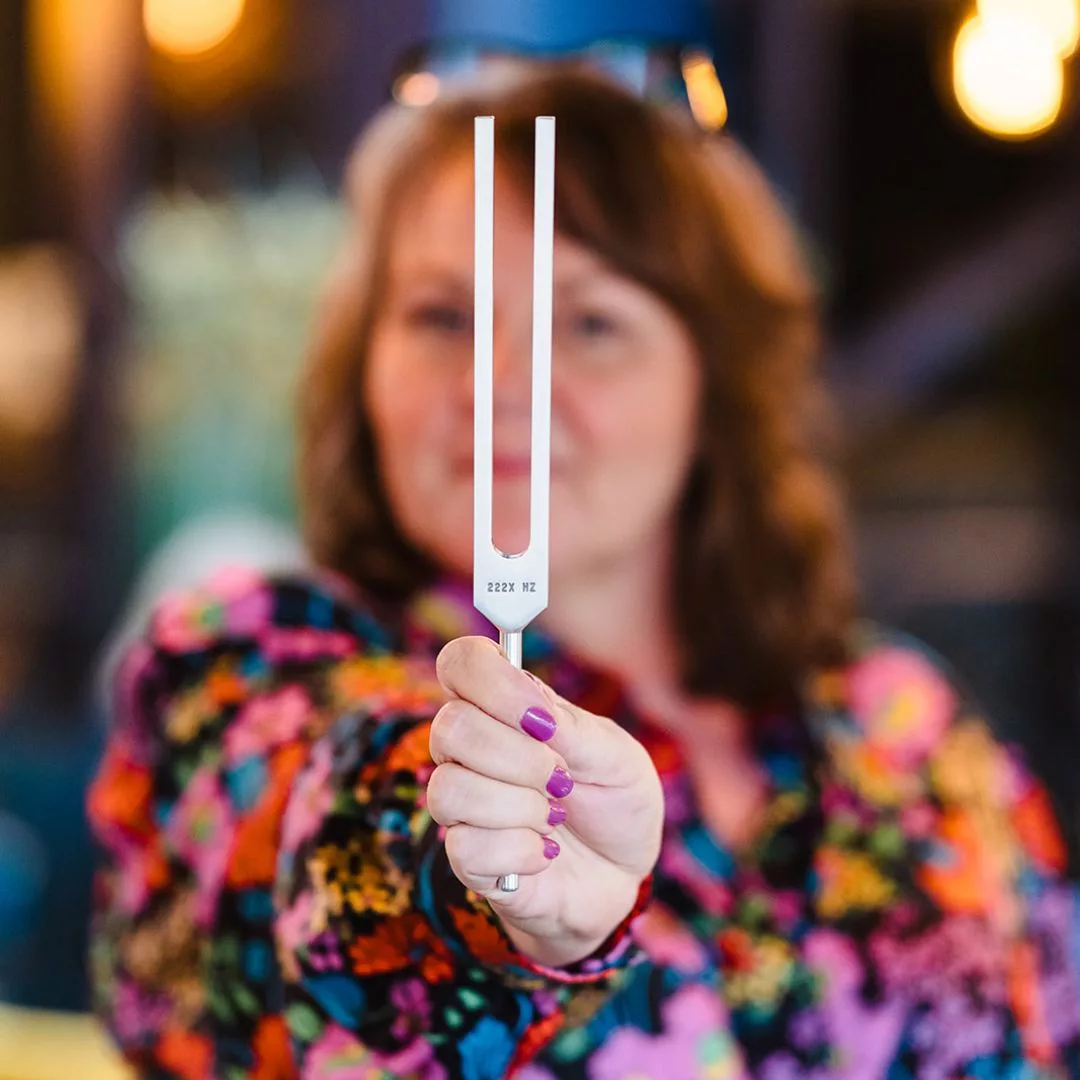
Biofield Tuning itself occupies an interesting position within this landscape. The clinical evidence is still early and limited. Some findings are encouraging, particularly around anxiety reduction, while other studies raise important methodological questions. Much remains uncertain, including the precise mechanisms through which people may experience benefit.
And yet uncertainty does not invalidate subjective experience.
Many people do report feeling calmer, more regulated, less emotionally reactive, or physically softer after sound-based sessions. These experiences may arise through a combination of physiological regulation, sensory processing, therapeutic interaction, expectation, attentional shifts, entrainment, or mechanisms we do not yet fully understand. Human healing processes are rarely reducible to a single explanatory pathway.
As a practitioner, I am less interested in making definitive claims about “healing frequencies” than I am in understanding what genuinely helps people feel more settled within themselves. Most clients are not seeking spiritual perfection or endless self-optimisation. They are seeking relief from chronic internal tension, emotional overwhelm, hypervigilance, and the exhausting sense that their nervous system never fully powers down.
That, to me, is where this work becomes meaningful.
I believe it is possible to remain scientifically grounded while also staying open to experiences that current research may not yet fully explain. In fact, I think responsible practice requires both discernment and curiosity. Dismissing every unexplained phenomenon outright can become just as limiting as accepting every claim uncritically.
For now, the most balanced position seems to be viewing Biofield Tuning as an evolving area of inquiry: one that sits at the intersection of sound, nervous system regulation, subjective experience, and emerging research. Whether future science ultimately validates, refines, or challenges aspects of the modality, the broader conversation around sound and human physiology is already revealing something important about how deeply responsive the nervous system is to rhythm, vibration, and sensory environment.
In Conclusion
I do not believe people need to suspend critical thinking in order to explore sound-based healing work.
In fact, I think the opposite is true.
The more grounded, evidence-aware, and intellectually honest we are about these conversations, the more useful they become. We do not need exaggerated claims about miracle frequencies or “proven biofield science” to acknowledge something important: human nervous systems clearly respond to rhythm, vibration, tone, and sensory experience in profound ways.
Some aspects of this are already well supported by research. Other aspects remain speculative, emerging, or difficult to measure. That uncertainty is not a weakness. It is simply the reality of studying complex human experiences that sit at the intersection of physiology, psychology, perception, and consciousness.
As a practitioner, I see Biofield Tuning not as a replacement for therapy, medicine, or evidence-based psychological support, but as another possible doorway into regulation and healing. For some people, it may feel deeply supportive. For others, it may not resonate at all. And that is okay.
What matters to me is approaching this work with both openness and discernment.
I think we can honour lived experience without abandoning scientific integrity. We can stay curious without becoming gullible. We can acknowledge that something feels meaningful without pretending we fully understand every mechanism involved.
And perhaps most importantly, we can stop reducing healing to a simplistic binary of either “fully proven” or “completely invalid.”
Human beings are more complicated than that.
If there is one thing years of working with nervous systems has taught me, it is this: people are often carrying far more internal tension than they realise. Many have become so accustomed to stress, hypervigilance, fascial armouring, emotional bracing, and internal acceleration that it no longer even registers to the individual as unusual.
Sometimes what they are seeking is not transformation in the dramatic, cinematic sense.
Sometimes they simply want to feel quieter inside themselves.
More settled. More present. More relaxed. Less reactive. More able to rest.
And if sound and vibration can help support that process – even partially – then I think it is a conversation worth having thoughtfully, honestly, and with genuine care for both the science and the human experience underneath it.
If you’re curious about exploring Biofield Tuning for yourself, I offer both 1:1 sessions and small group experiences designed to support nervous system regulation, emotional processing, and deep restorative rest.
You do not need to fully understand the theory for your body to respond to the experience.
Whether you are feeling chronically overwhelmed, emotionally reactive, exhausted by constant internal tension, or simply curious about how sound and vibration may support your wellbeing, you are very welcome to explore this work with me.
You can book a free Clarity Call or a session directly via this link.